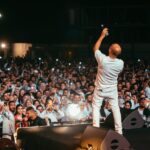



Reviving older songs is something we’ve grown used to hearing from many artists, and with the rapid evolution of electronic music, the trend has expanded dramatically, making it even more inviting to reintroduce classic works through a contemporary lens.
With the rise of independent bands over the past 10 years, many of them have reworked well-known songs with entirely different identities. Here, we look at eight standout experiments that found major success in reimagining Arabic songs.
Cairokee – Abdel Qader
“Abdel Qader ya بو علم ضاق الحال علي”… we grew up with Cheb Khaled’s “Abdel Qader” echoing in our ears. The song, which evolved from a simple folk poem in meaning into a singing icon across the Maghreb and several Arab countries, has been rearranged by many artists, most notably Cairokee. The band took part in the early editions of Red Bull Soundclash, where one of the well-known rules is that the guest act reworks a song with a different musical style. Cairokee surprised audiences with its own version of “Abdel Qader,” and didn’t stop at performing it live, but went on to release it officially across streaming platforms.
Jadal – Al Tobah
Abdel Halim Hafez holds a singular place in the hearts of Egyptians. Many artists have tried to imitate his identity and claim a similar place, but few succeeded. In 2003, Jadal emerged in an attempt to present rock through an Arabic voice, and in 2009 the band released its debut album, Arab Rock. The record included several attempts to renew Arabic musical heritage, and Jadal’s sound at the time stood out for the clarity of its musical phrases, blending Western instruments with Eastern styles. On Arab Rock, Jadal delivered a new arrangement of “Al Tobah,” which found major success and wide reach across the Arab world, to the point that many listeners began closely associating the band with its rendition of Abdel Halim Hafez’s song.
Massar Egbari – Ana Hawet
“Ana Hawet,” the celebrated romantic classic in the history of Arabic singing, was written by poet Younis El Qadi, composed and performed by Sayed Darwish. For years, Massar Egbari’s name has been closely tied to Sayed Darwish. Like many artists born and raised in Alexandria, the band chose to rearrange “Ana Hawet” with a completely different distribution, while preserving the spirit of the melody and the identity of its original recording.
Tayar – Ouda
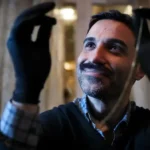
No one can deny the influence of Arab pop legend Hamid El Shaeri on entire musical generations. Tayar chose to reimagine the song and present it through a contemporary electronic lens on their new album Nos El Bahr, while preserving Hamid’s original structure. Tayar is a Jordanian band made up of the duo Ahmad Farah and Badr Hilalat. Their music often reflects their vision of everyday life through lyrics that lean toward philosophy and contemplation, fused with alternative pop and touches of electronic music.
Autostrad – El Layla Ya Samra
“El Layla Ya Samra,” with lyrics by Fouad Haddad and music by Ahmed Mounib, stands as one of the key early milestones in Mohamed Mounir’s journey. Autostrad surprised listeners on its third album, Nitrogen, released in 2013, by including “El Layla Ya Samra” in the tracklist and reshaping it through a more funk- and jazz-driven arrangement.
Ya Ghali – Nouran Abutaleb
Even though the band Gitara did not continue for very long, their run remains one of the most successful experiences among Gulf bands. “Ya Ghali” has always been tied to early-2000s nostalgia, largely because of how widely it spread during that era. The track was not only central to Gitara’s success, but also played a role in introducing a talent named Nouran Abutaleb. Nouran later rearranged the song in collaboration with Samer George, reviving a flood of memories in the process.
Hamed Sinno – Kalam El Nas
Across the many years in which George Wassouf delivered essential songs to the history of Arabic music, “Kalam El Nas” held a particularly large space for the generation of the 1990s. Twenty-two years after its original release, Hamed Sinno and Firas Abou Fakher of Mashrou’ Leila rearranged “Kalam El Nas” in their own way, giving it a renewed spirit.
Maryam Saleh – Nouh El Hamam
In 2014, Germany’s Jakarta Records released Sout’ha, an album that brought together nine female singers from Egypt, Tunisia, Libya, and Syria, each contributing either original songs or reinterpretations. Among the participating artists was Maryam Saleh, who presented “Nouh El Hamam,” a song drawn from Port Said folk heritage, in collaboration with producer Oddisee, transforming the sounds of the simsimiyya into electronic textures.